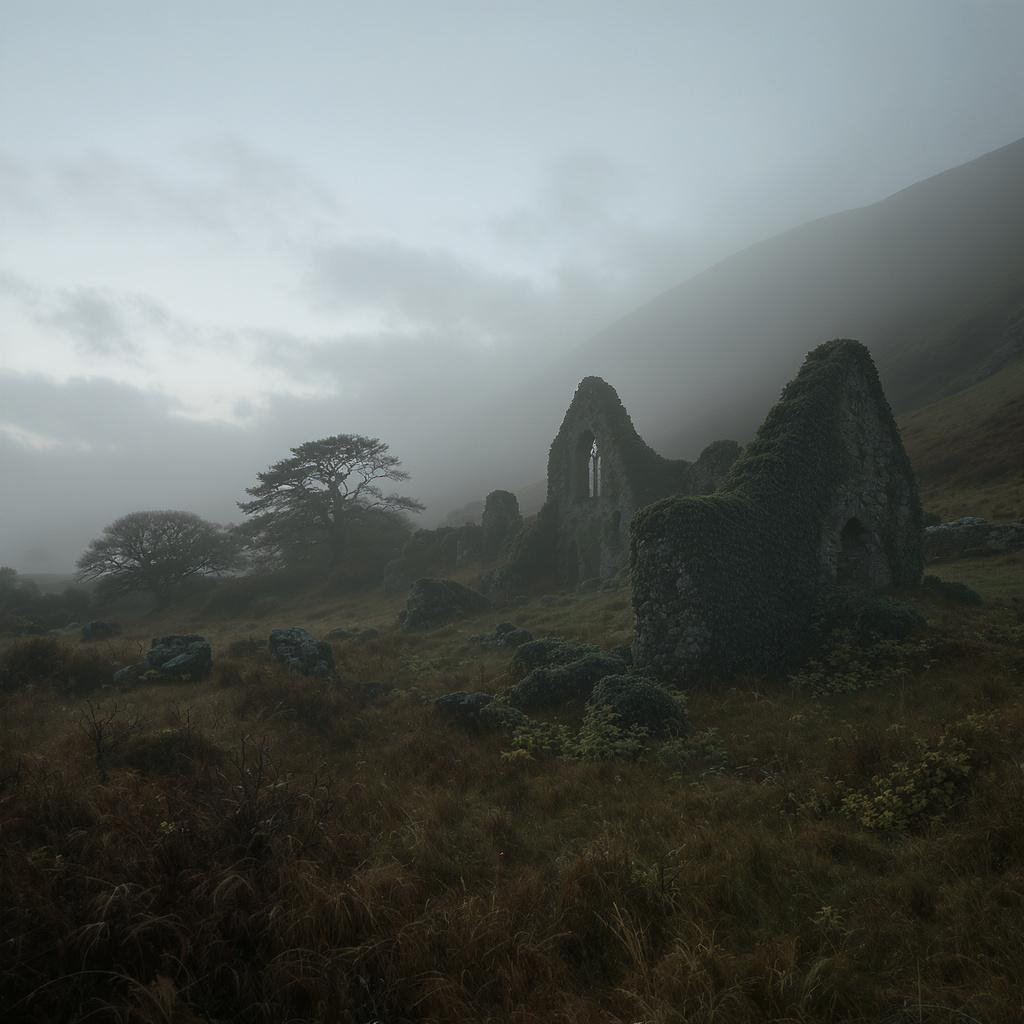
There are silences that wound and silences that hold. In writing What the Fog Conceals, I began to understand how easily they exchange places. I’ve always been drawn to stories where the most decisive act is not speech but its absence—where meaning leaks through what is withheld. Silence, if you treat it properly, is not emptiness; it’s architecture. It gives shape to the words it surrounds.
When I started the novel, I imagined sound everywhere—the sea on the lough, the scrape of ink, the low parish bells—but the longer I wrote, the more I heard what was missing. Whole passages felt stronger when I stripped the noise away. What remained was tension: the space between a question and its answer, the breath between guilt and confession. In those pauses the story found its pulse.
We like to think of dialogue as truth, yet language is rarely honest. People lie fluently. They hesitate, retreat, repeat. The characters in What the Fog Conceals do all of this, but their real confessions happen in silence—through a glance withheld, a door not opened, a letter left unread. Those quiet refusals tell you more about them than any line of dialogue ever could.
The challenge was restraint. Modern fiction often rushes to explain, to fill every gap with reason. But silence demands trust. You have to believe the reader can stand inside it without being told what to feel. I learned that from film—where a single held frame can speak louder than any monologue. In prose, that stillness is measured in syntax, rhythm, and the courage to stop before the sentence feels complete.
There is also another kind of silence: the institutional one. The way families, churches, and entire communities bury what doesn’t fit their story. That collective hush is far louder, and it haunts the novel’s landscape. When I visited the remains of Audley’s Town—the vanished village that first inspired the book—there was nothing left to see, just a field and the suggestion of walls beneath ivy. It struck me that silence is also an act of erasure. What isn’t spoken eventually disappears.
Writing the book became an act of resistance against that forgetting. Each chapter asked the same question in different ways: what is the cost of staying quiet? The answers were rarely comfortable. But somewhere in the unease, in those unsaid confessions, I found the truest sound the story could make.
What the Fog Conceals is, in the end, a novel built from silence—the kind that listens back.

Leave a Reply