Every book has its own internal weather system — the emotional pressure that shapes its atmosphere. For me, the rhythm of What the Fog Conceals came from music long before it took shape on the page. Some songs are built on restraint rather than release. Nothing Else Matters has the ache of control; Smells Like Teen Spirit carries a restless defiance looking for a fracture; November Rain is a slow collapse waiting for permission.
That is the rhythm I gravitate towards in fiction: tension held to the last possible moment, emotion delayed until it can no longer be contained. Discipline above the surface, volatility underneath.
This is how I write. Quiet pressure. Deliberate pace. The story reveals itself when the silence begins to strain.
What I Read to Stay Honest
When the work starts to drift, I return to books that treat restraint as architecture.
Sarah Waters’ The Little Stranger, Ishiguro’s The Buried Giant, and Shirley Jackson’s The Haunting of Hill House all carry an understanding that atmosphere is not decoration — it is the argument a book is making.
Real strangeness doesn’t need signposting. Folklore and local history help with that. They remind me that the world is already strange enough; invention is only ever a refinement of what we choose not to look at directly.
A Life Built on Pressure
Before fiction, I worked across finance, film, adventure sports, and mediation. I’ve built companies, made films, and taught people how not to panic on cliffs. I represented Northern Ireland in taekwondo at the 2014 Commonwealth Games and came home with a bronze medal.
On paper, these experiences are disconnected. In truth, they share one theme: pressure.
Numbers, cameras, heights, conflict — you learn how people behave when something is at stake. That instinct appears on the page as patience. I don’t rush the reveal; I let pressure do the work. Story comes from what the characters can’t yet say.
What Taught Me to Write
Film shaped me first. Rhythm. Framing. Negative space. Directors like Christopher Nolan and Panos Cosmatos showed how atmosphere can carry meaning independent of plot. Ishiguro and Jackson taught me that silence can be more revealing than confession.
It took me years to understand that I wasn’t writing about events — I was writing about omissions. The emotional archaeology beneath a place or family. Once I accepted that, the voice settled.
Where the Work Happens
Early morning is the best time for it — before the world asks anything of me.
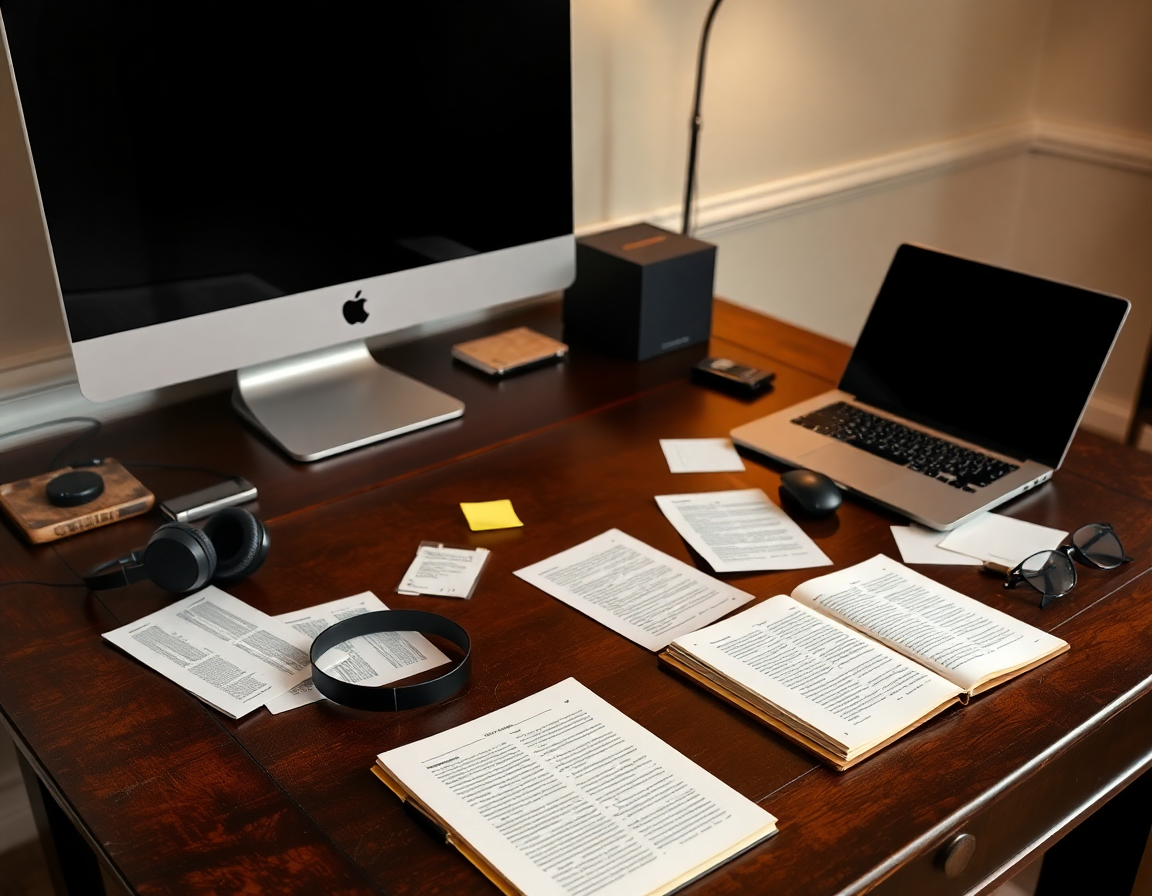
Usually, I’m at my desk with cold coffee, notes scattered, nothing elegant about the scene. When I’m stuck, I go to the coast. The sea has an indifference that resets everything. It doesn’t care if a paragraph lives or dies, which is strangely freeing.
I write best where there’s distance. Enough space for a sentence to breathe.
What I Wish I’d Known Earlier
Stop performing.
Write what is true, even if it makes you appear unsure at first. Style arrives once you stop imitating it. Guard your hours — no one else will. Don’t wait for someone to tell you you’re allowed. You learn by finishing, not by thinking about finishing.
What I Hope Stays With Readers
The worst horrors are rarely supernatural. They’re ordinary. They live in the quiet agreements that allow things to vanish — the silences that go unchallenged.
If a reader finishes the book and becomes a little more attentive to the things people choose not to name, then the story has done its work.
Leave a Reply