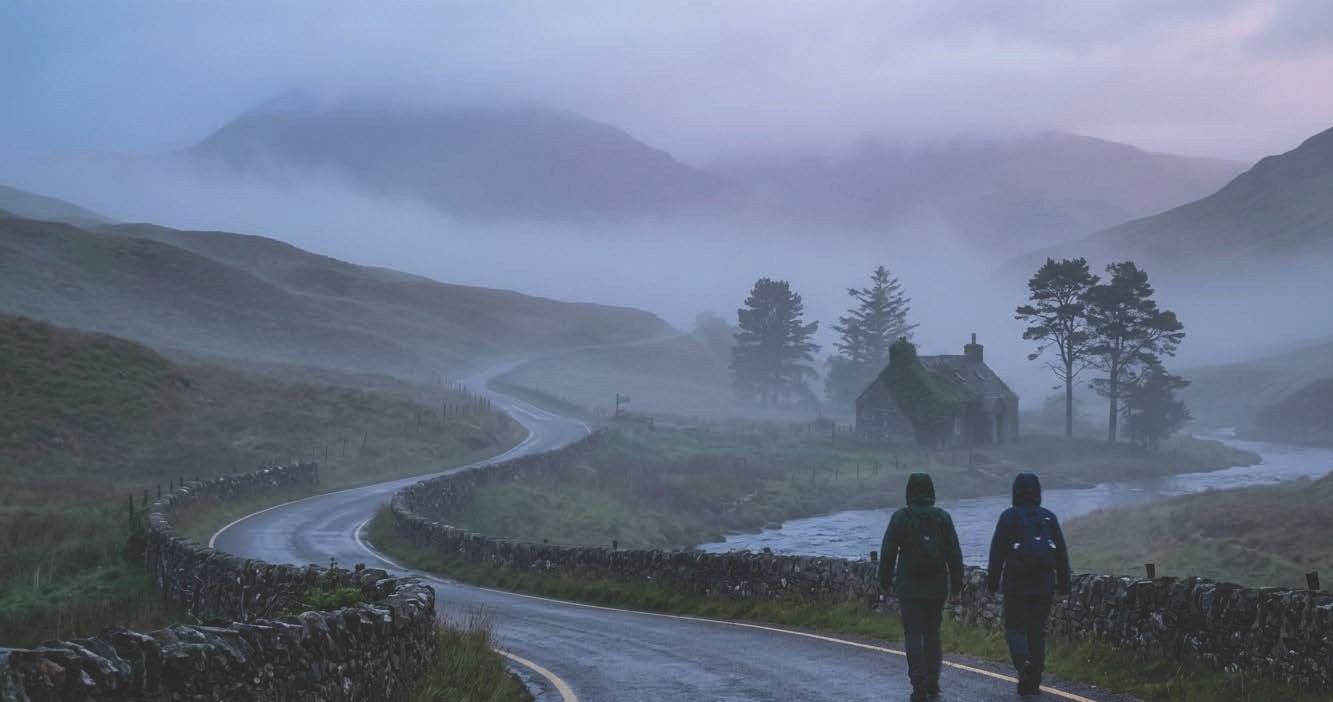
I’ve been asked, more often than feels reasonable, how I write atmosphere. The question carries a reasonable expectation: that there is a method, a set of steps, a formula involving weather and adjectives and the strategic deployment of silence. I wish I had one. What I have instead is a stubbornness about what prose should do when the lights go out.
The fog in my debut novel arrived before the characters did. I don’t mean that metaphorically. The opening image of What the Fog Conceals was the first thing I wrote, before I had a protagonist, before I had a plot, before I knew anything about the historical erasure of Audley’s Town or the quiet violence of a house that outlives its purpose. I had fog pressing against glass. That was the sentence. Everything else followed it.
I think that’s how atmosphere works when it works at all. Not as decoration applied to a story, but as the condition the story breathes inside. If the fog is only there for mood, you can feel it. It sits on the prose like paint on wet wood, something applied and unconvincing. But if the fog is the thing the story cannot see past, cannot think beyond, cannot solve, then it belongs. It earns its weight.
The mistake I made early, and that I keep encountering in the manuscripts of newer writers, is treating darkness as the absence of something. Darkness, the kind worth writing, doesn’t arrive when you remove the light. Something else takes its place. A room described as dark is lazy. A room where the fire has been allowed to die, where the bellpull hangs unused, where the tea cools without being drunk, where the silence carries posture rather than absence. That is a room the reader can step into and feel their own breathing change.
I learned this not from novels first, though the novels came later and confirmed what the places had already taught me. I learned it from places. From standing at the edge of a field in January and feeling the hedgerow lean in with the specific posture of something that had been watching and had only now decided to let itself be noticed. From the sound of a clock that had stopped in a house where no one remained to wind it. From County Down, where I walked the land that had swallowed Audley’s Town and found not ruins, but grass. Grass where a village had been. The neatness of that erasure did something to my writing that I have never quite undone.
When I talk about atmosphere in fiction, I mean the relationship between what is present and what has been removed. Weather has nothing to do with it. The Gothic tradition understands this better than most literary modes. The haunted house is never haunted by a ghost in the interesting versions. It is haunted by the fact that the house remembers what happened in it and the people living inside it have agreed not to. That agreement, that pact between silence and habitation, is the atmosphere. The ghost is just an excuse to notice.
My rules, such as they are, can be counted on one hand. Atmosphere must be touchable. The reader should feel cold, or damp, or the particular weight of a room that hasn’t been opened in months. If you can’t smell the scene, you haven’t finished writing it. Sound should imply presence rather than describe it. And silence, used deliberately, should do more work than any single line of dialogue.
Atmosphere cannot sustain itself without consequence. That took me longer to learn. A fog that persists for ten pages without anything changing beneath it becomes wallpaper. Dread requires escalation, even if the escalation is nothing more than a glove appearing on a chaise longue where no glove was the day before. The reader’s body knows the difference between tension that is going somewhere and tension that has been mistaken for pace. Bodies are better readers than minds.
There is a scene in What the Fog Conceals where Harriet opens a walnut cabinet that has always held the household ledgers and finds it empty. No drama accompanies the discovery. No crash of music, no gasp. She runs her finger along the bottom shelf and finds polished stillness. The fire cracks behind her. She doesn’t turn. That is the whole scene. But the emptiness of that cabinet carries the weight of an entire estate failing to record itself, of a family that has stopped keeping accounts because there is nothing left to account for.
I am more interested in that scene than in anything involving a spectre. The spectre is a shortcut. The empty shelf is a fact, and facts in fiction are more unsettling than fantasies because the reader cannot dismiss them. You can choose not to believe in ghosts. You cannot choose not to believe in an empty shelf.
Writing atmosphere is, for me, an act of paying attention until the attention itself becomes uncomfortable. Staring at the fog until the fog stares back. Not because there is anything supernatural in it, but because sustained attention to anything reveals how little of the world we normally consent to see.
I write in the dark because that is where the things that matter most refuse to stay hidden.
Leave a Reply